



 |  |  |
 |
Out of Season | 5 for $8.99 |
| Out of Season | ||
Selections of N. Campernelle (or N. x odorus) were taken from the wild and planted into gardens by 1595 (Bowles 140). Controlled crosses performed in the late 1800s by Mr. Dean Herbert and Rev. G. H. Engleheart showed it to be a natural hybrid between wild species, N. pseudonarcissus and N. jonquilla (Engleheart 38). Thus, the Campernelle is both a human hybrid, and a natural botanical plant!
Rev. Engleheart re-created a number of flowers to confirm their genetic origins, and succeeded with indistinguishable results (Engleheart 35-44). His work proved that a number of so-called “species” were actually wild hybrids. When pollen is transferred between jonquils and trumpet daffodils, in either direction, the seeds grow up looking like Campernelles (Engleheart 38, Chittenden 36).
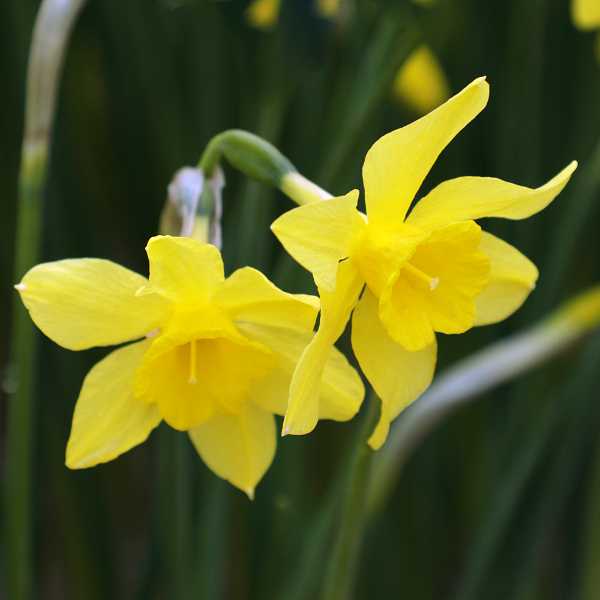
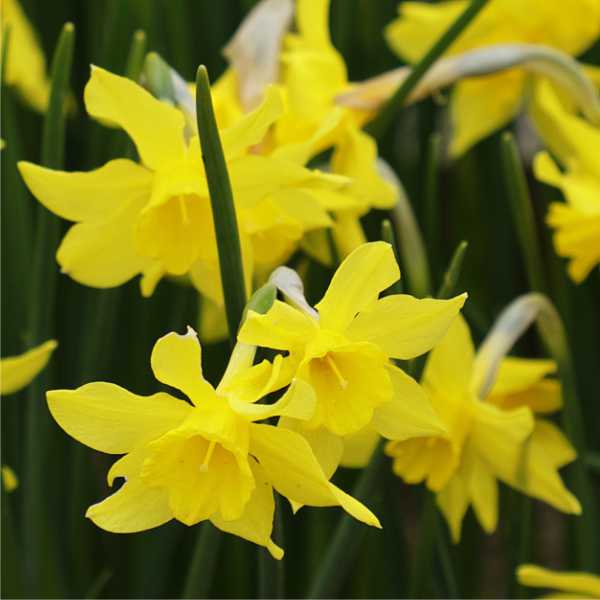
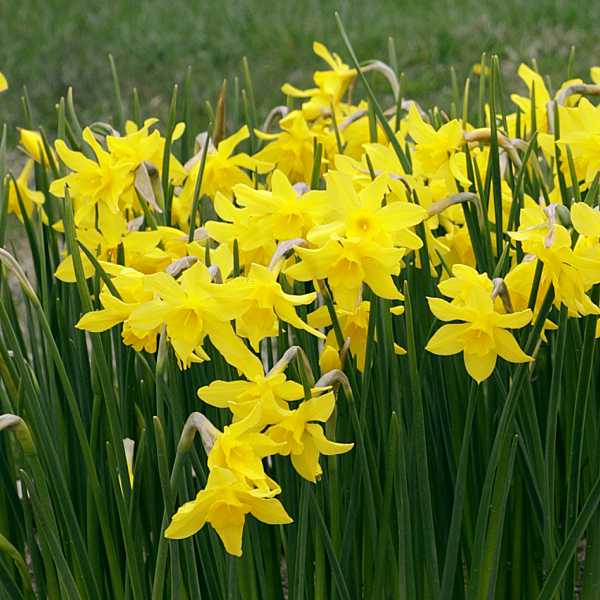
The Campernelle is beloved in the South, and characterized by twisty petals and a tiny, scalloped cup. Of all the places where I have planted it, it has only thrived in one spot. That place is sandy, dry, and gets full-sun all the time. It dies in the woods, but rock gardens are perfect.
In the South, it’s ordinary. But in the North, it’s extraordinary! For twice the excitement, take a look at the Double Campernelle!