

Terms of Use
| General |
| Planting Instructions |
| Terms and Conditions |
| Privacy Policy |
Planting Instructions
“If you plant daffodils on a windy day,
all your bad luck will blow away.”
I want you to be a perennial customer of daffodils.com, and to be delighted every spring by all prior orders. Both of these require the perennial return of your daffodils. Follow these planting instructions for satisfactory results.
Time to Plant
Plant your daffodils as soon as possible after receiving your order. The best time is right after the first frost. The bulbs must be in the ground for least 30 days before the ground freezes completely, or they may not survive the winter.
Site Selection
Daffodils require full-sun and well-drained soil. A suitable spot receives six or more hours of direct sunlight per day, and dries up quickly after storms. Any place that is shady, or subjected to prolonged periods of dampness, will not suffice.
Soil Preparation
First, you'll need to dig a hole. The ideal depth depends upon the size of the bulb. So to keep it simple, dig as deep as a standard shovel (8-10 inches), and set the dirt aside. Loosen the soil on the bottom, and remove any rocks or tree roots.
For best results, prepare an equal mixture of sand, top soil, and your garden soil. Use the mixture to raise the level of the bed to the optimum depth. It should be about twice as deep as the height of the bulb:
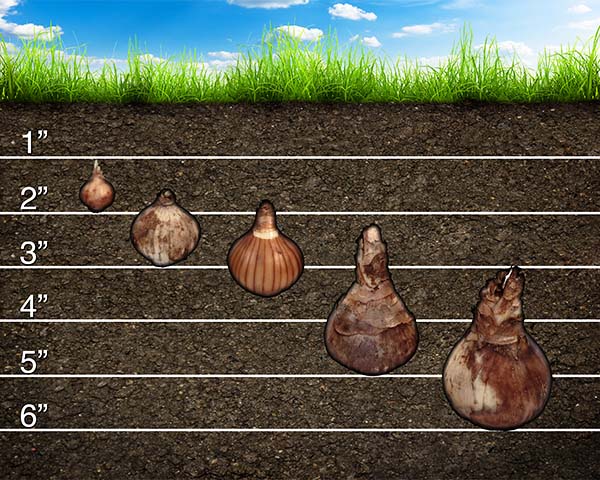
Plant 1 or 2 inches deeper in sandy soil, about 8 inches for large bulbs.
Place the bulbs into the bed tips-up, in the arrangement of your choice. Provide 6 to 8 inches of space between each, ensuring adequate sunlight as the plants grow larger.
Consider the approximate heights of the plants. Shorter varieties should be planted toward the south, so they won't be shaded by taller varieties.
Gently fill the bed with your soil mixture, making sure to keep the bulbs upright. Gently compact the soil, and fill to ground level.
Give the new bed some water, which initiates root growth.
Fertilizer
Low-nitrogen fertilizer is best, such as 5-10-10. A light sprinkle on the surface is enough. This can be done at planting, and in the springtime as the shoots emerge.
Care After Flowering
Do not cut, braid, or tie the foliage after flowering. While this may seem fashionable, it diminishes bulb growth. Allow the leaves to turn yellow before mowing over, about 3 months after flowering.
You may deadhead if you like. For sterile varieties, however, it doesn't matter.
Happy Planting!
| ← General | ↑ Top | Conditions → |